EAGLE
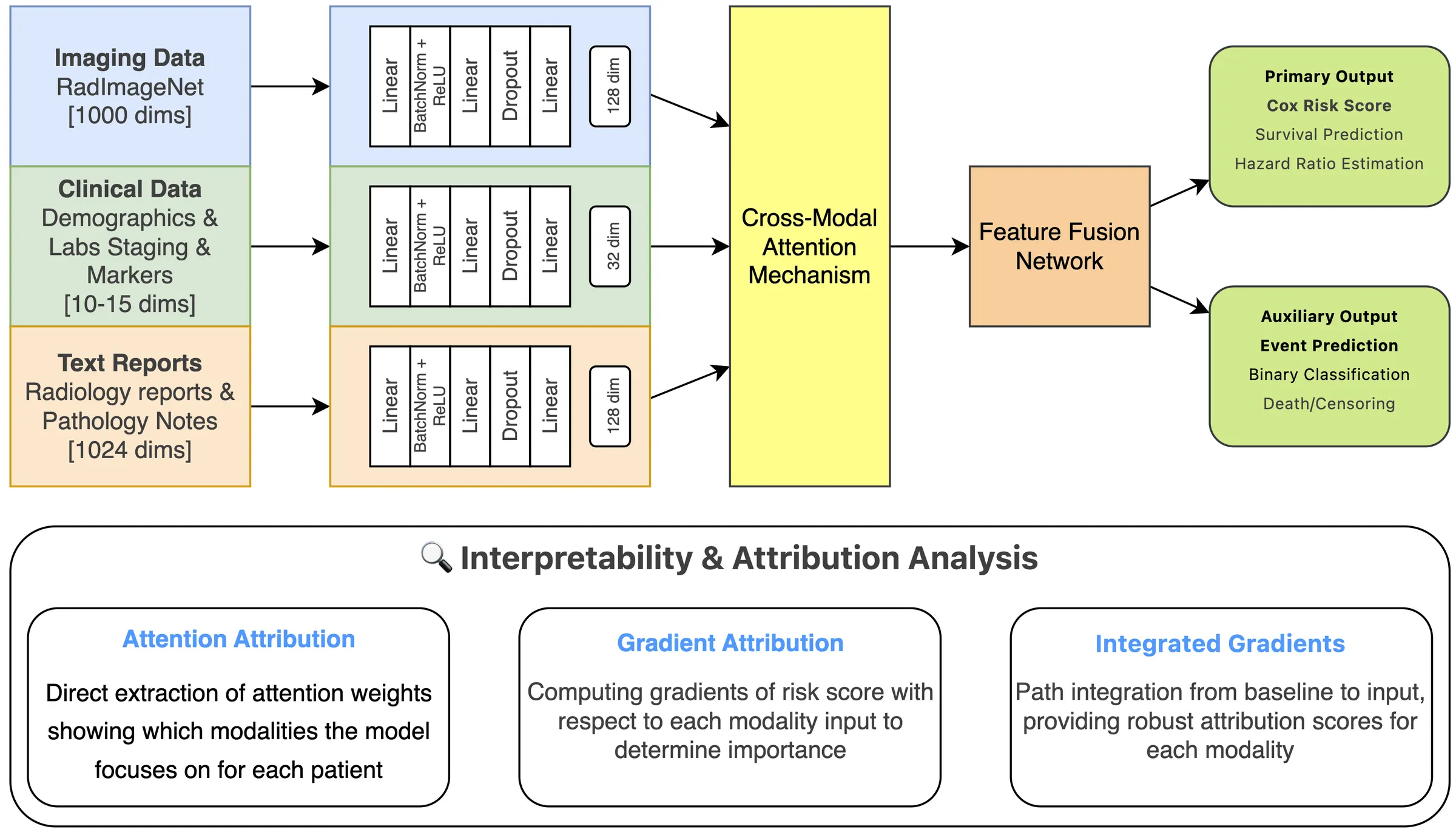
Figure: Reproduced from Tripathi et al. (2025), arXiv, CC BY-NC-ND 4.0.
Fusing imaging, report and clinical embeddings with cross-modal attention, then asking which modality drove each patient's risk score.
Several of my projects ship code, models, or data, so others can rebuild the analyses or apply the methods to their own cohorts. The Python packages, trained weights, and embedding datasets below are released through GitHub, Hugging Face and PyPI, each with a paper and a blog post explaining how it works.
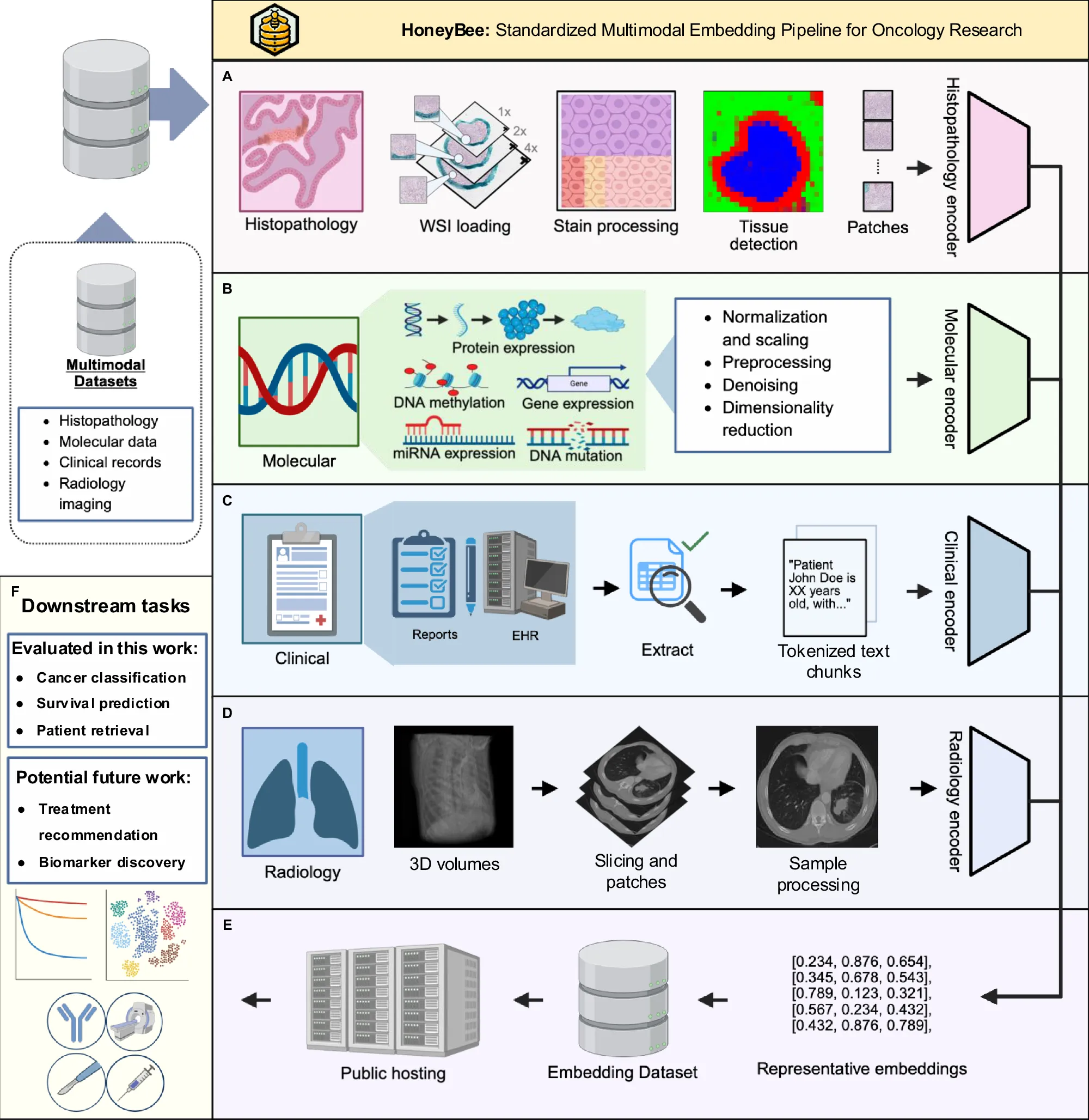
Figure: Reproduced from Tripathi et al. (2025), npj Digital Medicine, CC BY-NC-ND 4.0.
A publicly released framework that turns clinical text, slides, radiology and omics into patient embeddings, evaluated on 11,428 TCGA patients.
Figure: Reproduced from Tripathi et al. (2025), arXiv, CC BY-NC-ND 4.0.
Fusing imaging, report and clinical embeddings with cross-modal attention, then asking which modality drove each patient's risk score.
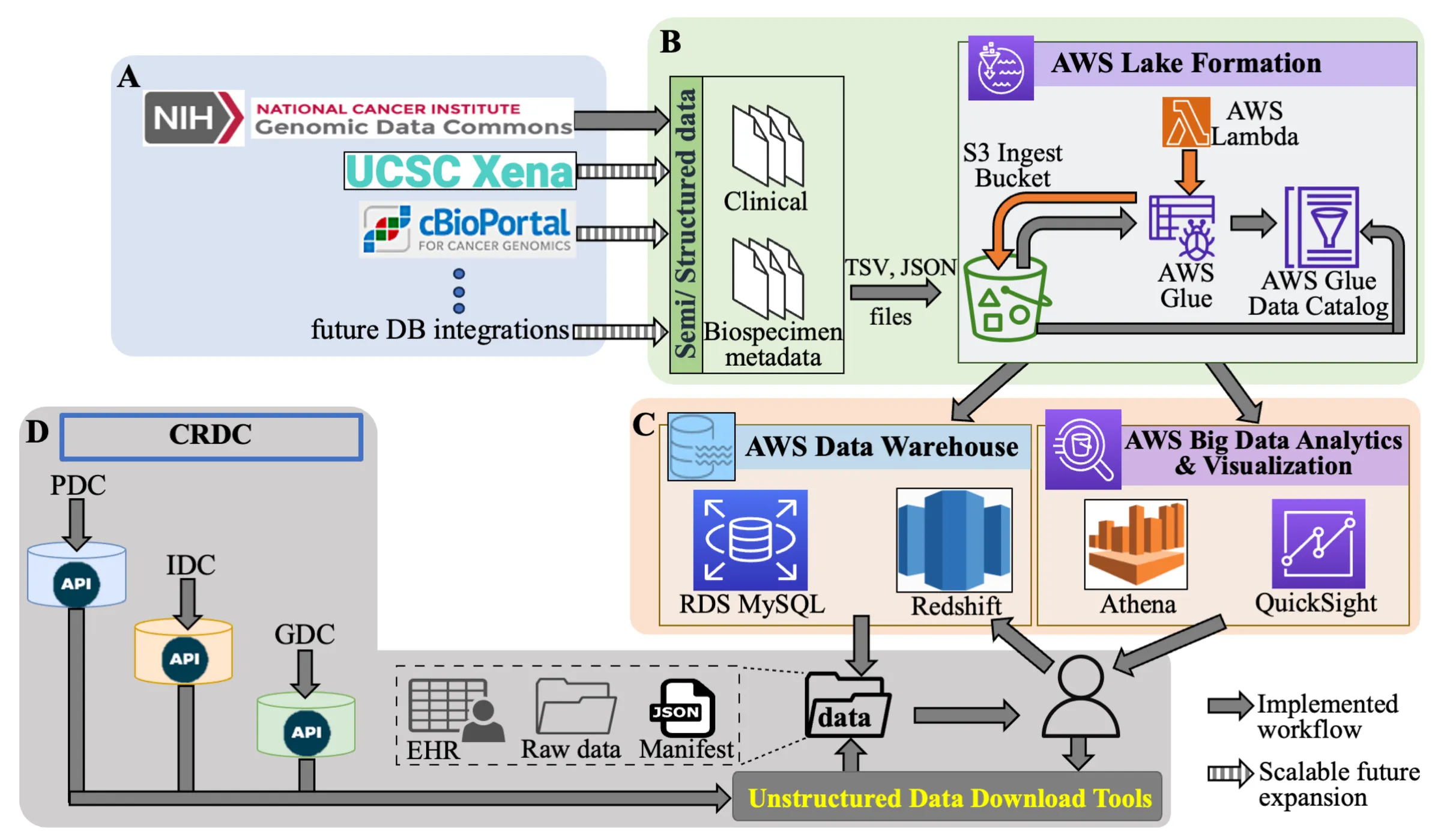
Figure: Reproduced from Tripathi et al. (2024), Sensors, CC BY 4.0.
A metadata-first cloud framework that consolidates 41,499 open-access cancer cases into one queryable warehouse and fetches images and omics on demand.
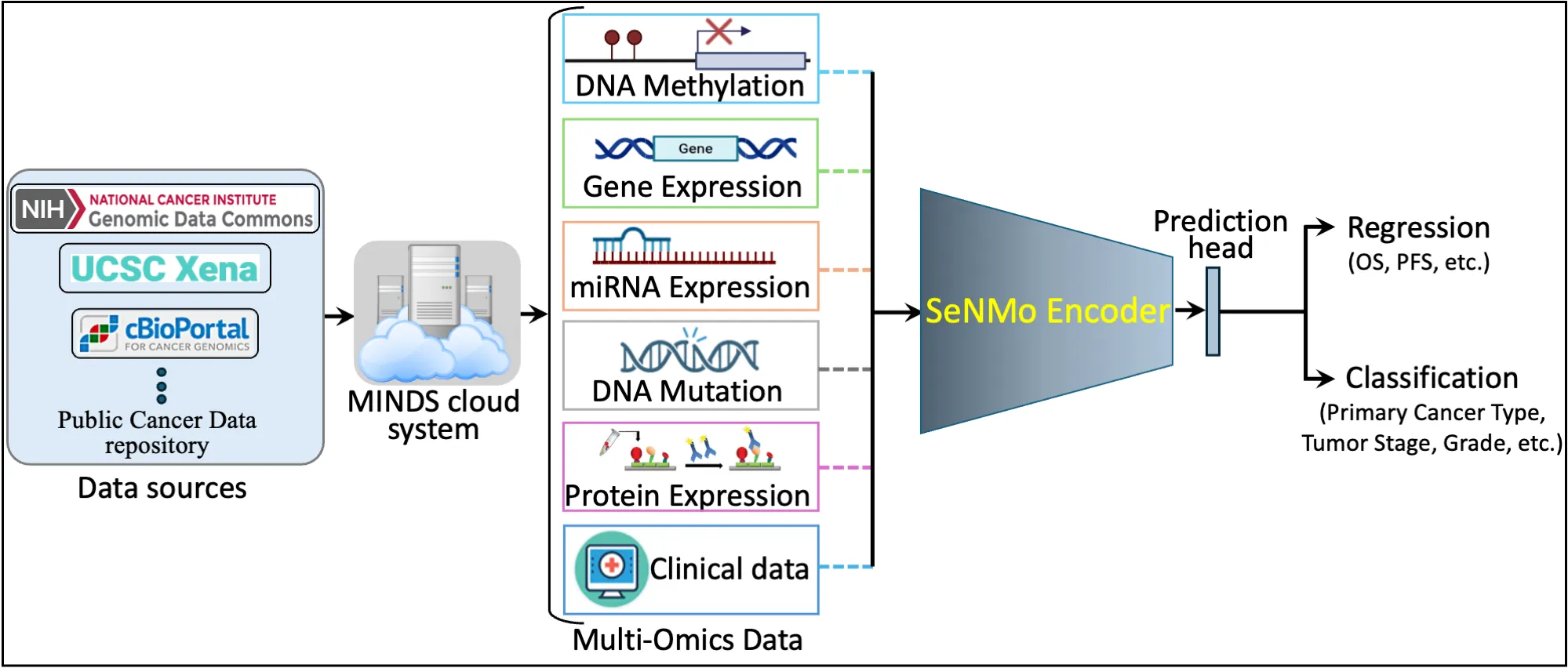
Figure: Reproduced from Waqas et al. (2024), arXiv, CC BY 4.0.
A self-normalizing network trained on five omics layers plus clinical variables from TCGA, then adapted to predict survival, cancer type and TLS ratio.
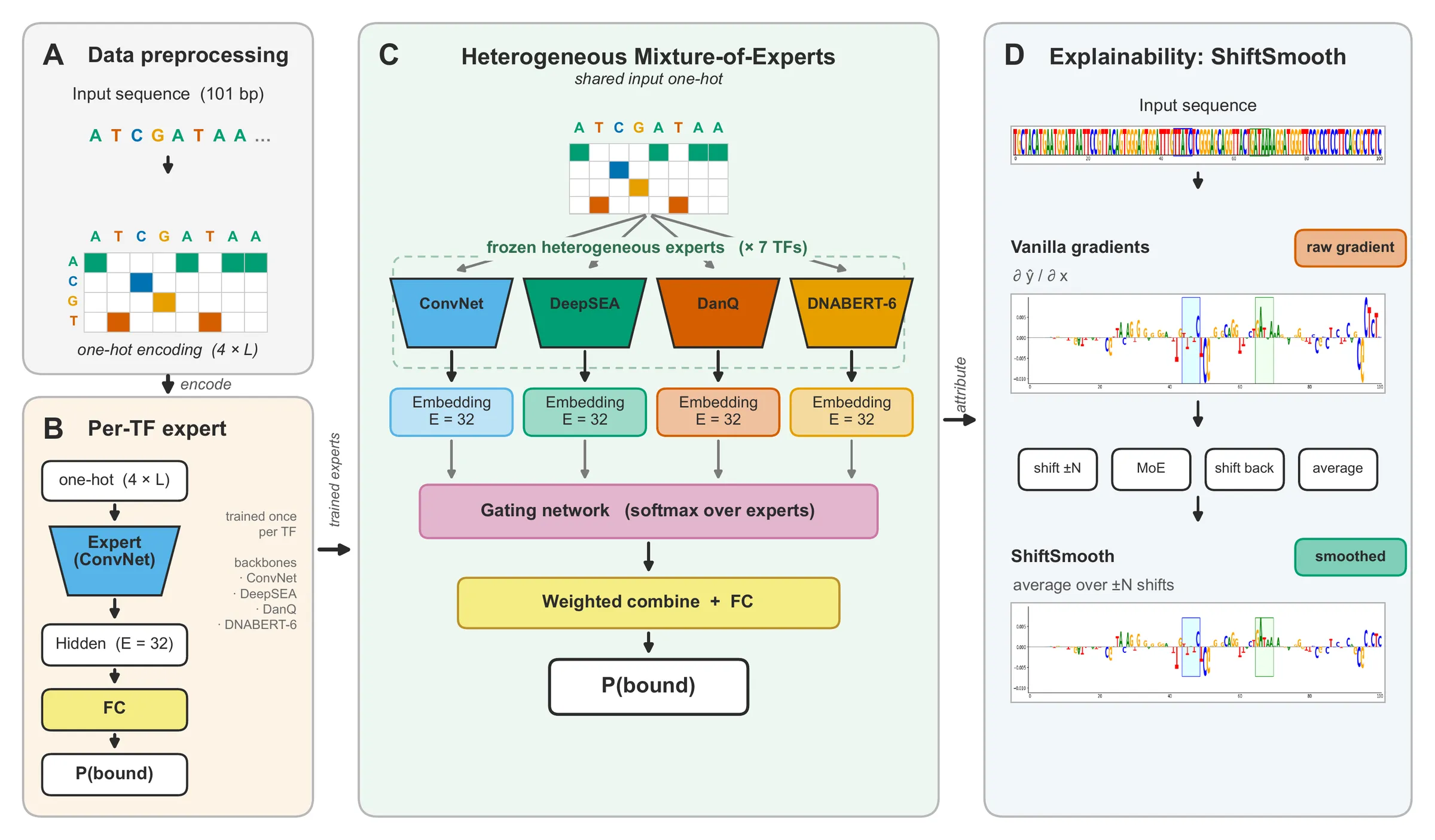
Figure: Reproduced from Tripathi et al. (2026), Mathematics, CC BY 4.0.
A dense mixture of experts that weights DeepBIND, DeepSEA and DanQ embeddings per input, tested on held-out transcription factors with fair negatives.